
 Curtain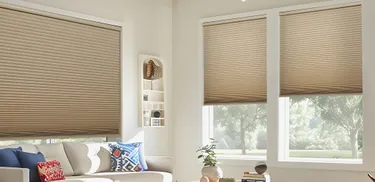
Do Motorized Blinds Actually Lower Your Energy Bill?
If your summer cooling costs keep climbing or your winter heating bill seems higher than expected, you may be wondering: do motorized blinds actually lower your energy bill?
The honest answer is yes, they can—but not because the motor itself saves energy.
A motorized blind and a manual blind made from the same fabric and construction provide essentially the same insulation and solar control. The difference is that motorization makes it much easier to keep the shade in the right position at the right time.
That distinction matters. A window shade can only reduce heat gain or heat loss when it is actually being used. Motorization turns that energy-saving potential into a consistent daily routine.
Yes, But the Motor Isn't What Saves Energy
A motor does not make a blind more insulating or better at blocking sunlight. If a motorized and manual shade use the same fabric, construction, and installation, their basic energy performance is essentially the same.
The energy-saving work is done by the shade itself.
For example, cellular shades use a honeycomb structure that creates air pockets at the window. This can help slow heat transfer. In summer, a closed shade can also reduce the amount of direct sunlight reaching the room.
So there are two separate functions:
The shade controls heat.
The motor controls the shade.
This is why choosing an energy-efficient shade is more important than simply choosing a more advanced motor.
If you're looking for energy efficient motorized blinds, start by considering the shade's construction, insulating properties, and fit. Motorization comes afterward as a way to control that shade more consistently.
How Can Motorized Blinds Reduce Your Energy Bill?
Motorized blinds can help reduce heating and cooling demand in two main situations: summer solar heat gain and winter heat loss.
In Summer: Reduce Solar Heat Gain
Sunlight entering through windows can add unwanted heat to your home, especially through large or heavily exposed windows.
That additional heat can increase the workload on your air conditioner.
A motorized shade can be programmed to close before periods of strong sunlight. For example, a west-facing window can automatically lower its shade during the afternoon when direct sunlight is strongest.
The basic relationship is:
Strong sunlight → more indoor heat → greater cooling demand
With the shade closed:
Less direct sunlight → less solar heat gain → potentially less cooling demand
The timing matters. Closing a shade after a room has already overheated is different from preventing much of that solar heat from entering in the first place.
In Winter: Help Reduce Heat Loss
Windows can also be a source of heat loss during colder weather.
A closed insulating shade adds another layer between the warm interior and the colder window. Cellular shades are particularly useful for this purpose because their honeycomb structure creates insulating air pockets.
Motorization can help make this behavior consistent.
For example, shades can remain open during sunny periods to take advantage of available daylight and solar warmth, then close in the evening when that benefit is gone.
The goal isn't to keep your shades closed all day. It's to use them when they can provide the most benefit.
Why Cellular Shades Matter
If energy efficiency is a priority, the type of shade matters more than the motor.
Cellular shades are designed with honeycomb-shaped cells that trap air and create an insulating layer at the window. Double-cell designs can provide additional insulating structure.
That makes cellular shades a strong option for homeowners looking for motorized blinds that save energy.
The two components play different roles:
Cellular construction helps manage heat transfer.
Motorization helps ensure the shade is used consistently.
Together, they can make it easier to turn the shade's energy-saving potential into actual day-to-day performance.
Motorized vs. Manual Blinds: Where Does the Difference Come From?
If a motor doesn't make the shade itself more efficient, why might motorized blinds save more energy in real-world use?
The answer is consistency.
A manual shade can provide the same solar control or insulation as a motorized one, but someone has to remember to adjust it.
Consider a summer afternoon. You leave home in the morning with your blinds open. By 2 p.m., direct sunlight is heating the room—but you're not there to close the shade.
A scheduled motorized shade can lower automatically before that peak period.
Nothing about the shade has changed.
What has changed is whether the shade was actually used when it mattered.
| Manual Blinds | Motorized Blinds | |
|---|---|---|
| Insulation | Depends on shade construction | Depends on shade construction |
| Solar control | Yes | Yes |
| Automatic scheduling | No | Yes |
| Operation while you're away | Difficult | Yes |
| Consistent timing | User-dependent | Automated |
This is the key distinction:
Motorization doesn't improve the shade's inherent energy performance. It improves the consistency of energy-efficient shade operation.
For homeowners who regularly forget to adjust their blinds, spend much of the day away from home, or have hard-to-reach windows, that difference can matter.
How Much Can Motorized Blinds Actually Save?
There is no single dollar amount that applies to every home.
The potential motorized blinds energy savings depend on several factors:
Climate: Hot climates may have more opportunities to reduce cooling demand, while colder climates may benefit more from reducing heat loss.
Window size: Larger areas of glass generally have a greater impact on indoor heat gain and loss.
Window orientation: Windows exposed to strong direct sunlight may benefit more from automated solar control.
Existing windows: Double- or triple-glazed windows generally provide better thermal performance than older single-pane windows.
Shade construction: Cellular shades can provide stronger insulation than many conventional window coverings.
Installation: A properly fitted shade can perform better than one with large gaps around the edges.
Consistency: The more often manual shades are left in the wrong position, the more useful automation can become.
Because these factors vary from home to home, be cautious about claims that motorized blinds will reduce every homeowner's energy bill by a fixed amount.
A better question is:
How much of your shade's energy-saving potential are you currently leaving unused?
If you already adjust your manual shades at the right times every day, the additional energy savings from motorization may be limited.
If your shades are often left open during hot afternoons or closed when winter sunlight could provide useful warmth, automation has more potential to make a difference.
Are Motorized Blinds Worth the Extra Cost?
If you're considering motorized blinds purely to reduce your energy bill, don't assume the upgrade will quickly pay for itself.
The motor doesn't create additional insulation. You're paying for a system that makes the shade easier and more consistent to operate.
Motorization can be particularly worthwhile if:
You frequently forget to adjust your blinds.
You're away from home during periods of strong sunlight.
You have large or hard-to-reach windows.
Your rooms experience noticeable solar heat gain.
You want automatic daily or seasonal schedules.
The upgrade may be less compelling if you already operate manual shades consistently or if your windows receive very little direct sunlight.
In other words, motorized blinds are most valuable when automation changes your behavior.
If you already do the right thing manually, the motor mainly adds convenience. If you often don't, it can help turn an occasional energy-saving action into a consistent routine.
Motorized Cellular Shades From Persilux Home
For homeowners who want to combine cellular insulation with automated operation, motorized cellular shades offer a practical option.
Persilux Home's motorized cellular shades combine the insulating structure of cellular shades with automated control, helping make everyday shade adjustment easier and more consistent.
Depending on your needs, options such as double-cell construction, custom sizing, and no-drill installation can help you choose a shade that fits your windows and routine.
For energy performance, start with the shade's construction and fit, then use motorization to make sure it is operated when it matters.
Explore Motorized Cellular Shades or try Free Samples for $1.99 Shipping to compare fabrics before ordering.
The Bottom Line
Yes, motorized blinds can lower your energy bill—but the motor itself isn't the reason.
The real advantage is automated, consistent shade control. If you want to make better use of your window coverings for solar control and insulation, motorization can help ensure they operate when it matters.