

Best Window Shades for West-Facing Windows in Spring & Summer
If you have west-facing windows, you already know the struggle. Everything feels fine in the morning—then suddenly, by mid-afternoon, your room turns into a heat trap. Sunlight becomes harsh, glare takes over your screens, and your cooling system starts working overtime.
This isn’t just about comfort. It’s about energy efficiency, usability of space, and even long-term wear on your interiors.
Many homeowners assume that any shade will solve the problem. In reality, west-facing windows require a much more intentional approach. The right solution isn’t simply about blocking light—it’s about controlling heat, managing glare, and maintaining a comfortable indoor environment.
That’s why more performance-focused brands like Persilux are shifting toward functional, tailored shading systems designed specifically for these real-world challenges. But before choosing a product, it’s essential to understand what actually makes a shade effective.
Why West-Facing Windows Are Challenging in Summer
West-facing windows receive the most intense sunlight during the hottest hours of the day. Unlike east-facing windows that benefit from softer morning light, west-facing ones are exposed to low-angle afternoon sun that penetrates deeper into your living space.
This creates a unique combination of problems:
- Rapid heat buildup in late afternoon
- Persistent warmth that lingers into the evening
- Increased reliance on air conditioning
At the same time, glare becomes a major issue. Direct sunlight hitting screens, glossy surfaces, or even light-colored furniture can make spaces uncomfortable and difficult to use.
Because of this, choosing the right window treatment isn’t just a design decision—it’s a functional one.
What Makes a Shade Effective for Heat Control?
An effective shade does more than block sunlight—it actively reduces solar heat gain before it enters your room.
This involves three key mechanisms:
- Reflection: bouncing sunlight away from the window
- Absorption: reducing the intensity of incoming heat
- Insulation: limiting heat transfer indoors
The best-performing shades combine all three, rather than relying on a single approach.
For west-facing windows, where sunlight is both direct and prolonged, these factors become even more critical. A poorly chosen shade may reduce brightness but still allow significant heat to build up indoors.
Heat Blocking vs Light Blocking
One of the most common misconceptions is that blocking light automatically means blocking heat. While the two are related, they are not the same.
- Light blocking focuses on visibility and brightness
- Heat blocking focuses on solar energy control
For example:
- Blackout shades completely eliminate light, but may still absorb and transfer heat inward
- Solar or light-filtering shades allow some light through while reducing heat more efficiently
This is why simply choosing the darkest option isn’t always the smartest move. In many cases, a balanced solution delivers better overall comfort.
Fabric Openness & Solar Reflection
When evaluating solar shades, openness factor is one of the most important technical details to understand.
Openness refers to how tightly the fabric is woven:
- 1% openness: maximum heat and glare reduction
- 3% openness: balanced performance
- 5% openness: more visibility, less protection
Lower openness reduces heat gain but also limits visibility. Higher openness improves views but allows more sunlight in.
If you’re exploring solar shades in more detail, understanding openness levels is essential—it directly impacts how much heat and glare your shades can manage.
In addition to openness, solar reflection plays a major role. High-performance fabrics are designed to reflect a portion of solar radiation outward, preventing it from entering your home.
Color & Backing Material
Color is not just an aesthetic choice—it affects thermal performance.
Light-colored fabrics reflect more sunlight and reduce heat gain
Dark-colored fabrics absorb heat but provide clearer outward views
Some advanced shades also include specialized backing materials, such as:
- Reflective coatings
- Thermal linings
- Multi-layer constructions
These features enhance insulation and improve overall efficiency.
Choosing the right combination of color and backing ensures your shades contribute to both comfort and energy savings.
Best Blinds for West-Facing Windows
Different types of shades offer distinct advantages depending on your priorities—whether it’s heat reduction, glare control, or maintaining natural light. Understanding how each option performs in real conditions helps you make a more informed and practical decision.
Solar Shades
Solar shades are one of the most effective solutions for managing west-facing sunlight.
They are designed to:
- Reduce glare without eliminating natural light
- Reflect a portion of solar heat
- Maintain outside visibility
Compared to other options like cellular or zebra shades, solar shades are particularly effective in spaces where you want to preserve daylight while controlling heat.
They are commonly used in:
- Living rooms
- Home offices
- Large window areas
- Cellular Shades (Honeycomb)
Cellular shades
Cellular shades are built with a honeycomb structure that traps air, creating an insulating barrier between the window and the room.
This design:
- Reduces heat transfer
- Improves energy efficiency
- Helps maintain consistent indoor temperatures
They perform well in both summer and winter, making them a year-round solution.
For homeowners focused on reducing energy costs, cellular shades are often one of the most effective options available.
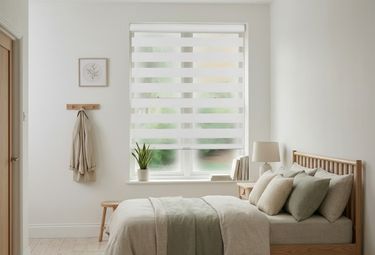
Dual Shades (Zebra Shades)
Zebra shades offer a flexible approach to light control through alternating sheer and opaque fabric bands.
This allows users to:
- Adjust light levels throughout the day
- Switch between visibility and privacy
- Maintain a modern, clean aesthetic
While they may not provide the same level of heat blocking as tightly woven solar fabrics, they offer greater versatility.
They are ideal for:
- Multi-use spaces
- Living areas with changing light needs
- Design-focused interiors
- Blackout Shades
Blackout shades
They are designed to completely block incoming light, making them ideal for environments where darkness is essential.
They are best suited for:
- Bedrooms
- Media rooms
- Spaces requiring full privacy
However, they come with trade-offs. During the day, they eliminate natural light entirely and can make a space feel enclosed. Additionally, they may not reflect heat as effectively as specialized solar materials.
For west-facing windows, they are often most effective when used in combination with other shade types.
Best Shade Solutions by Room Type
Choosing the right shade also depends on how each room is used. Different spaces have different priorities—some need more light, while others require better insulation or privacy.
- Living Room: Solar shades or zebra shades work well for balancing natural light and glare control. They keep the space bright while reducing harsh afternoon sunlight.
- Bedroom: Blackout or cellular shades are better suited for comfort and insulation. They help block light for better sleep while also improving temperature control.
- Home Office: Low-openness solar shades are ideal for reducing screen glare without completely darkening the room, making them a practical choice for daytime productivity.
Tailoring your shade selection by room helps create a more consistent and comfortable environment throughout your home, especially when dealing with strong west-facing sunlight.
How to Block Heat Without Darkening the Room
This is one of the most common concerns among homeowners.
If you’re trying to reduce heat without sacrificing natural light, the key is to focus on materials and design rather than simply blocking sunlight.
Effective strategies include:
- Using light-filtering fabrics
- Choosing low-openness solar shades
- Selecting reflective or light-colored materials
- Layering different types of shades
Many homeowners researching this topic often look for solutions that block heat while still keeping rooms bright—and the answer typically lies in combining the right fabric with the right level of openness.
When Shades Alone Are Not Enough
In some situations, especially with large west-facing glass panels or homes located in hotter climates, interior shades alone may not be enough to fully control heat gain. While high-performance shades can significantly reduce glare and improve comfort, they still operate on the inside of the window—meaning some level of solar heat has already entered through the glass.
This is why, in more demanding environments, a layered approach becomes necessary.
Additional solutions can include:
- Window films to reduce solar radiation
- Exterior shading systems such as awnings
- Architectural features like overhangs
By combining these strategies with interior shades, you create a multi-layered defense against heat gain. Instead of relying on a single solution, this approach reduces solar radiation at different stages—before it hits the glass, as it passes through, and once it enters the room.
The result is not just a cooler space, but a more stable and energy-efficient indoor environment, even during the most intense summer afternoons.
Custom vs Ready-Made Shades: Why Fit Matters
Fit plays a critical role in performance—not just appearance. Even the best materials won’t work well if the shade doesn’t properly cover the window.
Ready-made shades are built for standard sizes, which often leaves small gaps along the edges. With west-facing windows, where sunlight enters at a low angle, these gaps can easily let in heat and glare, reducing overall effectiveness.
Over time, this can lead to:
- Uneven light and hot spots
- Reduced heat control
- Lower overall comfort
Custom-fit shades, on the other hand, are made to match your exact window dimensions, ensuring more consistent coverage and better performance.
They offer:
- Better coverage with minimal gaps
- Improved glare control, especially in the afternoon
- Enhanced insulation for more stable indoor temperatures
If you’re comparing options, exploring custom window shade solutions can help you see how proper fit makes a noticeable difference in both comfort and results.
Final Thoughts: Finding the Right Balance
West-facing windows present a unique challenge, but they are far from impossible to manage. The key is understanding that the best solution is rarely about extremes.
It’s not about blocking all light or maximizing brightness—it’s about balance.
By combining the right shade type, fabric properties, and installation approach, you can significantly reduce heat gain while maintaining a comfortable and usable living space.
Solutions like solar shades, cellular designs, and dual-layer systems each offer different advantages. When thoughtfully selected—and especially when customized—they can transform how your space feels during the hottest parts of the day.
That’s where brands like Persilux come into play, offering tailored shading solutions designed to meet both functional and aesthetic needs. With the right approach, west-facing windows don’t have to be a problem—they can become a well-managed feature of your home.

Copyright © 2024 Persiluxhome