
 Curtain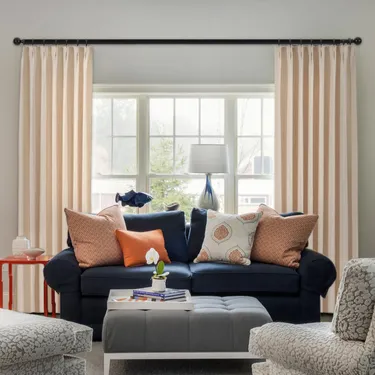
How to Choose the Right Curtains for a Cozy and Comfortable Home
The right curtains should balance light control, privacy, comfort, fabric performance, and interior style rather than simply matching the color of your sofa. If you are deciding how to choose curtains, start by identifying what the window needs to do, then select a suitable fabric and style for the room. Finally, consider whether curtains alone can provide enough control or whether combining them with shades would be more practical.
Windows influence both daylight and indoor comfort. The U.S. Department of Energy notes that window characteristics such as orientation, glazing, frame construction, and solar heat gain can affect a building's energy performance. Window coverings are therefore worth considering as part of a broader approach to managing light and comfort, although their actual effect depends on the window, covering, climate, and how the covering is used.
Consider What You Need Your Curtains to Do
Before comparing colors or patterns, decide what you expect your curtains to accomplish. A curtain that looks attractive but provides insufficient privacy or light control may become frustrating after installation.
Start by considering the window's direction, the amount of sunlight it receives, the room's privacy requirements, and how frequently you will open and close the covering. A south- or west-facing window with strong afternoon sunlight may require different treatment from a shaded north-facing window.
| Main requirement | Suitable curtain consideration | Common application |
| More privacy | Privacy or opaque lining | Bedroom, street-facing room |
| Softer daylight | Light-filtering fabric | Living room, dining room |
| Stronger darkness | Blackout fabric or lining | Bedroom, media room |
| Natural appearance | Linen or linen-blend fabric | Living room, bedroom |
| Easy maintenance | Durable, wrinkle-resistant material | High-use rooms |
| Flexible light control | Curtains combined with shades | Large or sunny windows |
Light control is particularly important because excessive sunlight can cause glare and increase solar heat gain. The Department of Energy identifies interior shades and blinds among the measures that can help reduce unwanted solar heat gain, while also allowing occupants to adjust daylight according to conditions.
However, curtains should not be treated as a replacement for efficient windows or appropriate climate-control measures. Their performance depends on construction, installation, coverage, and daily use. A practical approach is to treat curtains as one component of the room's overall comfort strategy.
Choose the Right Curtain Fabric for Your Space
Once you understand the window's functional requirements, fabric becomes easier to evaluate. Different materials change how curtains hang, how much light passes through, how much texture they add, and how much maintenance they require.
Linen, Linen Blends, and Synthetic Fabrics
Linen is often chosen for its visible texture and relaxed appearance. It works particularly well in interiors where the goal is to create a warm, natural atmosphere. However, pure linen can wrinkle more easily and may require more attention during care.
Linen blends can offer a practical compromise between natural texture and everyday durability. JX Linen Blend Curtains, for instance, use a linen-polyester blend that provides a textured appearance while being designed for regular residential use. When comparing similar products, pay attention to fiber composition, light-filtering performance, care requirements, and colorfastness rather than relying on the word "linen" alone.
Synthetic fabrics such as polyester are also widely used because they can offer consistent appearance, durability, and easier maintenance. They may be particularly practical for households where curtains are frequently opened, closed, cleaned, or exposed to direct sunlight.
Light-Filtering or Blackout?
The choice between light-filtering and blackout curtains should reflect the room's purpose.
Light-filtering curtains allow some daylight through while softening brightness and reducing visual exposure. They are often suitable when you want a room to remain naturally bright.
Blackout curtains are designed to block substantially more light. They can be useful in bedrooms, nurseries, media rooms, or spaces where early morning or nighttime light is disruptive.
There is no universal "best" option. A living room with attractive outdoor views may benefit from maintaining daylight, while a bedroom may prioritize darkness and privacy.
Consider Color and Texture Together
Color affects how large, bright, or visually warm a room feels, but texture also matters. A heavily patterned curtain can become a focal point, whereas a textured neutral fabric may add depth without dominating the room.
Before ordering, check fabric samples under both natural and artificial lighting. This is particularly important for beige, gray, cream, and other muted colors, which can appear noticeably different depending on surrounding surfaces and the time of day.
Choose Curtains Based on Room Type
The best curtains for living room spaces are not necessarily the best choice for bedrooms. Each room has different patterns of use, privacy requirements, lighting conditions, and decorative priorities.
Curtains for Living Room
For curtains for living room areas, the main goal is often to balance daylight and privacy without making the space feel enclosed. If the windows receive comfortable natural light, a light-filtering fabric can soften glare while preserving some daylight.
Full-length curtains can also influence how the room's proportions are perceived. Installing the curtain hardware appropriately above and beyond the window frame can create a more continuous visual line, while adequate fullness helps the fabric form natural folds instead of appearing flat.
Neutral linen or linen-blend curtains can work well with wood, upholstered furniture, and contemporary interiors because their texture adds warmth without requiring a strong pattern.
Bedroom Curtains
Bedroom curtains generally require greater attention to privacy and light control. If the room faces a bright street or receives strong early-morning sunlight, light-filtering fabric alone may not provide enough darkness.
Blackout curtains, blackout-lined curtains, or a layered window treatment can offer stronger control. For bedrooms that do not need complete darkness, a moderately light-filtering fabric may create a softer atmosphere while still reducing direct brightness.
Thermal comfort is another consideration. Window coverings can influence how occupants experience a room, but they should not be described as a guaranteed substitute for insulation or efficient glazing. The Department of Energy emphasizes that window performance depends on several factors, including glazing, frame construction, and solar heat gain.
Curtains for Other Rooms
Dining rooms generally benefit from curtains that complement the furniture without obstructing movement around the window. In a home office, glare control can be more important because direct sunlight can interfere with computer screens.
Kitchens and bathrooms require additional consideration because humidity, moisture, cooking residue, and cleaning can affect fabric choice. In these rooms, easy maintenance may be more important than a delicate decorative finish.
Should You Use Curtains Alone or Layer Them with Shades?
Curtains can provide privacy, light management, and decoration on their own, but they do not always provide the same level of control as a layered window treatment.
Combining curtains with shades allows each component to perform a different function. A shade positioned close to the glass can provide precise daytime light or privacy control, while curtains add softness and visual warmth. This approach is especially useful for bedrooms, large windows, and rooms exposed to strong sunlight.
| Curtains alone | Curtains + shades |
| Simpler installation | More flexible light control |
| Lower visual complexity | Greater privacy options |
| Suitable for moderate light-control needs | Useful for bright or exposed windows |
| Easier to maintain as one layer | Two materials may require more maintenance |
| Works well for decorative priorities | Better suited to changing conditions |
Layering does not automatically mean better performance. It adds cost, hardware, and visual weight, so it makes the most sense when the additional control is genuinely useful.
For example, a homeowner could keep a light-filtering shade partially open during the day and close the curtains in the evening. In a bedroom, a blackout shade could handle the primary light-control requirement while decorative curtains provide a softer finished appearance.
This approach also reflects how window coverings are actually used. Recent Department of Energy research into residential windows and coverings examined how households use blinds, shades, curtains, and other coverings, noting that climate and solar heat gain can influence both the type of covering selected and how often it is closed.
Measure Your Windows Before Ordering
Correct measurements are essential when buying custom curtains. Even a high-quality fabric can look poorly proportioned if the panels are too short, too narrow, or positioned incorrectly.
Measure the window according to the installation method and the manufacturer's instructions. Decide whether the curtains will be mounted inside or outside the frame, where the rod or track will sit, and how close the panels should extend toward the floor.
Also consider fullness. Curtains need enough fabric to create natural folds when closed; simply matching the window's exact width can result in a flat appearance. The appropriate amount depends on the fabric, heading style, desired look, and manufacturer's recommendations.
For custom products, checking available sample services can also reduce uncertainty. A physical sample lets you assess the fabric's texture, weight, color, and light-filtering characteristics before purchasing the complete treatment.
Conclusion
The most reliable way to decide how to choose curtains is to evaluate the entire window rather than focusing on one feature. Start with privacy and light requirements, select a fabric appropriate for the room, coordinate its color and texture with the existing interior, and then determine whether additional shades are necessary.
For curtains for living room spaces, a textured light-filtering fabric may provide a comfortable balance between daylight and privacy. For bedroom curtains, stronger light control may be more important. In either situation, accurate measurements and fabric samples can help avoid common purchasing mistakes.
For homeowners looking for made-to-measure window treatments, Persilux offers custom curtains and shades in different materials, light-control options, and configurations, along with fabric samples and measurement support. Its range can be considered by shoppers who want to apply these selection principles to a customized window treatment.